
In Japan, when children enter elementary school (shōgakkō), daily routines change significantly.
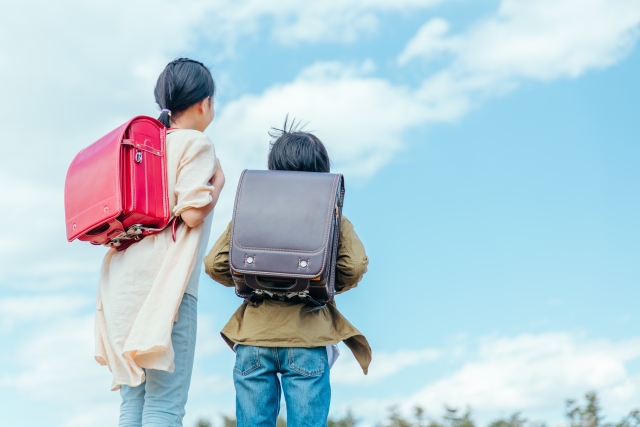
Children who were previously dropped off and picked up at kindergarten or daycare often begin walking to and from school on their own, sometimes in groups and sometimes alone, depending on the school and neighborhood.
For foreign parents living in Japan, this can feel especially stressful—
new rules, unfamiliar systems, and language barriers can make it hard to know what is “normal” or safe.
To ease this anxiety, our family decided to use a GPS tracker for children, starting from the first day of elementary school.
- Why We Chose Mitene GPS (みてねGPS) in Japan
- Why Apple AirTag Was Not the Right Choice for Us in Japan
- GPS Tracker Comparison (Japan-Based Devices)
- How We Use Mitene GPS in Daily Life
- Monthly Fee: A Small Price for Safety
- Why We Avoid Smartphones for Young Children in Japan
- Looking for a Reliable Kids’ GPS in Japan?
- Final Thoughts
Why We Chose Mitene GPS (みてねGPS) in Japan
There are many GPS trackers available in Japan, but we chose Mitene GPS, a device specifically designed for children living here.
Here’s why:
- Excellent battery life – we only need to charge it about once a month
- Reliable coverage across Japan, including suburban and rural areas
- Multiple antennas, providing stable and accurate location tracking
- Optional Mitene Talk model, which allows simple text/voice communication
The device is small, lightweight, and easy for children to carry discreetly.
Why Apple AirTag Was Not the Right Choice for Us in Japan
We also considered using an Apple AirTag, but ultimately decided against it.
AirTags rely on nearby Apple devices to update location data.
This works well in very dense urban areas like central Tokyo, but in many parts of Japan—especially residential suburbs or countryside areas—updates can be unreliable.
In a worst-case scenario, such as a child being taken to a remote area, location tracking may stop completely.
For peace of mind, we preferred a dedicated GPS device with its own communication network, designed specifically for child safety in Japan.
GPS Tracker Comparison (Japan-Based Devices)
Here is a simple comparison of popular kids’ GPS trackers commonly used in Japan:
| Product | Device Cost | Monthly Fee | Battery Life | Notes |
|---|---|---|---|---|
| Mitene GPS | ¥3,000–¥4,000 | ¥528–¥748 | Up to 2 months | Stable, multiple guardians |
| BoT Talk GPS | ¥5,280 | ¥528–¥748 | 2–4 weeks | Messaging available |
| amue link | ¥3,960–¥5,980 | ¥599–¥748 | ~1 week | High accuracy |
| soranome | ¥14,520 | ¥539 | ~1 week | SOS button |
Prices are approximate and may vary.
How We Use Mitene GPS in Daily Life
Peace of Mind During School Commutes
In our child’s school, first graders walk home together, but preparation often takes longer than expected.
Dismissal times can change, and communication from school may be limited—especially if Japanese is not your first language.
With GPS tracking, we can see exactly where our child is, which significantly reduces anxiety.
After-School Activities and Playgrounds
When our child goes to a children’s center or meets friends after school, the GPS confirms they are safely at the agreed location.
Because backpacks are sometimes left aside during play, we place the GPS in a zippered pocket pouch attached to clothing.
This works especially well in parks and open areas.


My daughter use this one ↓

Travel History as a Memory Tool
An unexpected benefit is during family trips.
The GPS movement history becomes a digital travel log, and we sometimes save screenshots as memories of our journeys around Japan.
Monthly Fee: A Small Price for Safety
Some parents hesitate about monthly fees, but in Japan, this cost feels reasonable compared to the peace of mind it provides.
Many families around us—including Japanese families—also use Mitene GPS, which helps our child feel comfortable and not “different.”
Why We Avoid Smartphones for Young Children in Japan
Some families give children an old smartphone instead of a GPS tracker, but we don’t recommend this for younger elementary students:
- Smartphones are generally prohibited at Japanese schools
- Too many unnecessary functions and distractions
- Excessive screen use may affect eyesight and focus
A GPS-only device is simple, discreet, and school-appropriate in Japan.
Looking for a Reliable Kids’ GPS in Japan?
If you’re raising children in Japan and want extra peace of mind, Mitene GPS is a practical and widely trusted option.
✔ Designed for Japan’s school system
✔ Long battery life
✔ Easy setup (even with limited Japanese)
✔ Trusted by many local families
👉 Check the latest details and pricing here:

Final Thoughts
- Walking to school is common for children in Japan
- GPS trackers provide reassurance, especially for foreign parents
- Dedicated GPS devices are more reliable than AirTags nationwide
- Mitene GPS balances simplicity, coverage, and battery life
If you’re navigating parenthood in Japan,
a kids’ GPS tracker can be one of the most helpful safety tools you choose.
日本語バージョン👇(Japanese version)

コメント