
Living in Japan brings many surprises, especially for families who have just moved here or those from overseas.
The daily life of a Japanese elementary school student is quite different from what you might be used to.
As someone who studied abroad in Canada, I found the school schedules, habits, and rules incredibly refreshing and unique.
In this post, I’ll walk you through a typical day for a Japanese elementary school student – from leaving home to returning after school.
1. School Uniform and Commute
Japanese public elementary school students typically wear casual clothes, including a hat and a randoseru (school bag).
Sneakers are a must – sandals, heels, or flat pumps are never worn to school. The importance of comfort, especially for outdoor physical activities, is emphasized.
At my daughter’s school, the rules are more relaxed, and some girls do wear heels, but they seem to struggle with activities like jump rope (which made for some funny moments!).
Regarding commuting, most children in Aichi Prefecture walk to school in groups called Tokohan (school commuting groups).
These groups consist of around 10 students, with older kids (5th or 6th graders) leading the group.
This provides peace of mind for parents as it ensures safety during the journey.
2. The Start of the School Day
Upon arriving at school, students take out their textbooks and put away their belongings. Some children will check their schedules and write them down in their Renrakucho (communication notebook), which they then submit to their teacher.
Some students prefer to play until the morning meeting starts.
Renrakucho is a very important tool in Japanese schools.
You can find them in bookstores and stationery shops – here’s a cute one I recommend!


If there are any issues or if you need to communicate something with the teacher, you can write it down in the renrakucho (communication notebook), and the teacher will respond the next day. Generally, schools avoid phone calls unless absolutely necessary. Even if you’re not confident in Japanese, writing in English is fine as teachers can look it up, and it’s often easier to communicate this way than by phone!
3. The School Schedule
The school day typically consists of 4 lessons in the morning, each lasting 50 minutes. After the second lesson, there is a short break, where kids can go outside and play.
At around 12:30 pm, students gather for the much-anticipated Kyushoku (school lunch). Unlike other countries, students don’t bring their own lunches.
Instead, school lunches are served, and the school takes into account any allergies a student may have.
One unique aspect of Japanese elementary schools is the Kyushoku-Toban system, where students take turns wearing special aprons and serving lunch to their classmates.
After a week of wearing these aprons, students wash and iron them at home before passing them on to the next person.
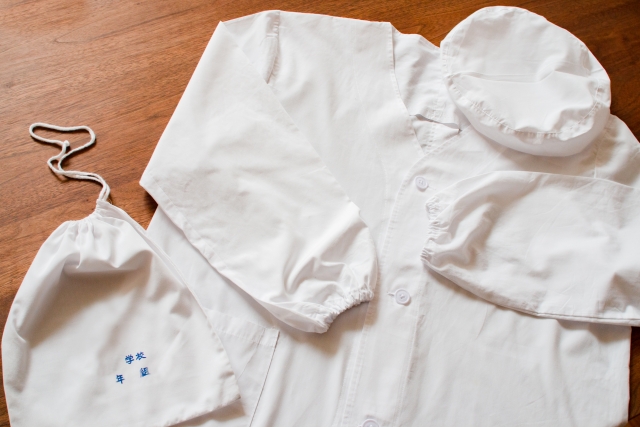
It’s best to avoid using strong-scented fabric softeners or laundry detergents on these school aprons. Recently, the term “fragrance pollution” has become common, as many people are sensitive to strong scents, even if you personally like them.
Additionally, since the apron is used for handling food, it’s best to avoid floral scents or anything too fragrant.
4. Post-Lunch Activities
After lunch, students clean up, brush their teeth, and spend time cleaning the school. Cleaning duties are done by the students, and this practice is quite unique to Japan.
They sweep the floors, clean the bathrooms, and do other tasks.
In the afternoon, students have a break for recess, where they can play outside or visit the library. For younger students, the day ends after the 5th lesson, while older students may have a 6th lesson on certain days.
5. Returning Home
After school, younger students often walk home in groups, while older students go home on their own.
At first, this concerned me, so I provide my daughter with a GPS tracker to ensure her safety.

6. School Rules
School rules can vary, but some common regulations include:
- Hair Dyeing: While it’s acceptable in many countries, dyed hair is considered rebellious in Japan. Some schools prohibit it, while others allow it.
- Clothing: Hoods are not allowed on jackets because they can be grabbed during physical activities.
- Items Not Allowed: Phones, toys, and games are typically prohibited at school.
- Snacks: Students are not allowed to bring snacks.
When I was studying abroad, we had to bring our own lunch, and sometimes we would include a small snack or buy something at school. However, in Japanese schools, bringing and eating snacks is prohibited, even on special event days. - Water Bottles: Students carry water bottles with them, but they must be of a certain type, such as those with a strap for easy carrying. Tea and Water only allowed, no juice.
My recommendation is this one ↓ It’s dishwasher-safe, hygienic, and has excellent thermal insulation, which is why it’s my favorite.


For summer, I recommend this one ↓ Japanese summers are hot! It’s important to stay hydrated, so I make sure to send my child with a water bottle of this size.

・Stationery: At my daughter’s school, they have relaxed rules, so pretty much any stationery is fine.
However, at my friend’s school in a rural area, stationery with patterns, characters, or cute charms is not allowed. Since the rules can vary by school, make sure to check the school’s guidelines!
In more relaxed schools, girls tend to buy cute pencils, erasers, and other stationery items like the ones below ↓


7. After-School Activities
After school, children often enjoy snacks (especially if they’re hungry after lunch!) and then work on their homework.
Some may play at the park or go to the community center to meet friends.
For older students, it’s common to go out alone, but younger children may have their parents accompany them.
Some students also attend after-school activities, such as sports or music lessons. I’ll write another post on popular extracurriculars in Japan.
Conclusion
This is how a typical weekday looks for a Japanese elementary school student!
How does it compare to your country’s school life?
Feel free to share your thoughts in the comments!
Next time, I’ll show you the actual textbooks and notebooks used in Japanese schools. They are great tools for learning Japanese!


コメント