Have you heard of the “Kin-chan Method”? It’s a revolutionary Japanese no-dig farming technique that focuses on harnessing the power of soil fungi (microbes) to create incredibly fertile land without chemical fertilizers.
In this article, I’ll take you through my personal journey of building healthy garden soil using this natural method.
Whether you are a beginner or an experienced gardener, you’ll find everything you need to know here:
- Essential Materials: What you need to prepare (dried leaves, wood, etc.)
- Step-by-Step Instructions: How to build your high mound.
- Real Challenges: What I found difficult during the process.
- Practical Success Tips: Advice based on my hands-on experience.
If you’re interested in organic gardening, regenerative agriculture, or sustainable soil preparation, the Kin-chan method is a game-changer you don’t want to miss!
What Is the Kin-chan Farming Method?
The Kin-chan Farming Method focuses on improving soil health by utilizing the power of beneficial microorganisms and fungi, especially filamentous fungi.
There are three main types of Kin-chan farming:
- Raised beds with organic matter that encourage filamentous fungi
- A compost-style method using kitchen waste
- A method that utilizes weeds
👉 In this article, I will focus on the raised-bed method using filamentous fungi.
Core Concept of the Kin-chan Farming Method
The goal of this farming technique is to grow healthy vegetables by relying on natural soil ecosystems, without pesticides or chemical fertilizers.
Utilizing Beneficial Microorganisms
“Kin-chan” refers to beneficial soil microorganisms and fungi. These microbes help:
- Break down organic matter into nutrients
- Improve soil structure
- Protect plants from pests and diseases
By intentionally creating a balanced microbial environment, plant growth is naturally enhanced.
Prioritizing Soil Health
Because no chemicals are used, soil microorganisms are preserved and encouraged.
This leads to a self-sustaining soil cycle, making this method ideal for long-term, sustainable gardening.
Using Organic Materials
Common organic materials include:
- Weeds
- Fallen leaves
- Rice husks
Despite being eco-friendly, this method often produces high-quality vegetables with surprisingly good yields.
Kitchen waste version article is here👇
Benefits of the Kin-chan Farming Method (My Personal Experience)
After reading the book and trying it myself, here’s what impressed me most:
- No pesticides or chemical fertilizers — healthier for the body
- Fewer insect problems
- Healthy, nutritious vegetables are said to attract fewer pests
- This surprised me, because organic vegetables are often believed to have more insect damage
- Almost no watering or additional fertilizing required
- More cost-effective than conventional soil preparation
- No need for repeated tilling as long as organic matter is supplied
If you’re interested, I highly recommend reading the original book — it completely changed my perspective on soil and farming. (But there are only Japanese books)
What you need to prepare
Organic Materials (Food for Fungi)
Examples include:
- Fallen leaves
- Small branches
- Logs
- Bamboo
- Rice husks
- Charcoal
- Organic lime
For my garden, I used items that are easy for anyone to obtain:
- Fallen leaves
- Small branches
- Organic lime
Why I Chose These:
- Logs may cause issues in rental gardens
- Bamboo is hard to source
- Rice husks are seasonal and require drying time
- Charcoal costs money, and I wanted to keep expenses low
Where I Collected Fallen Leaves
I collected fallen leaves from a large nearby public park.
Before doing so, I contacted the city’s park management office to confirm it was allowed for personal use.
They told me it was fine — and even helpful, since it contributes to park cleaning.
💡 Tip: If you’re unsure, call your local municipality first.
I collected about six 45-liter bags, and working together with my family made it a fun experience.
Black Plastic Mulch
- Recommended width: 180 cm
This width is officially recommended because the method requires wide and tall raised beds.
However, since wide mulch wasn’t available locally and I wanted to reduce costs, I used the widest mulch I could find at a home center and adjusted the bed width accordingly.
👉 I’ll report on whether this adjustment affects results in future updates.


Mulch Pins
You’ll need quite a lot.
Official guidelines recommend securing the mulch every 50 cm.
I used affordable pins from a dollar store, and surprisingly, they’ve held up well even on windy days.
This type of pins you need ↓

Large Bags for Transporting Organic Matter
I used 45-liter garbage bags provided annually by my city.
Paper shopping bags also work well — especially when collecting leaves in public places where plastic bags might feel awkward.
How to Build the Raised Bed (Soil Preparation)
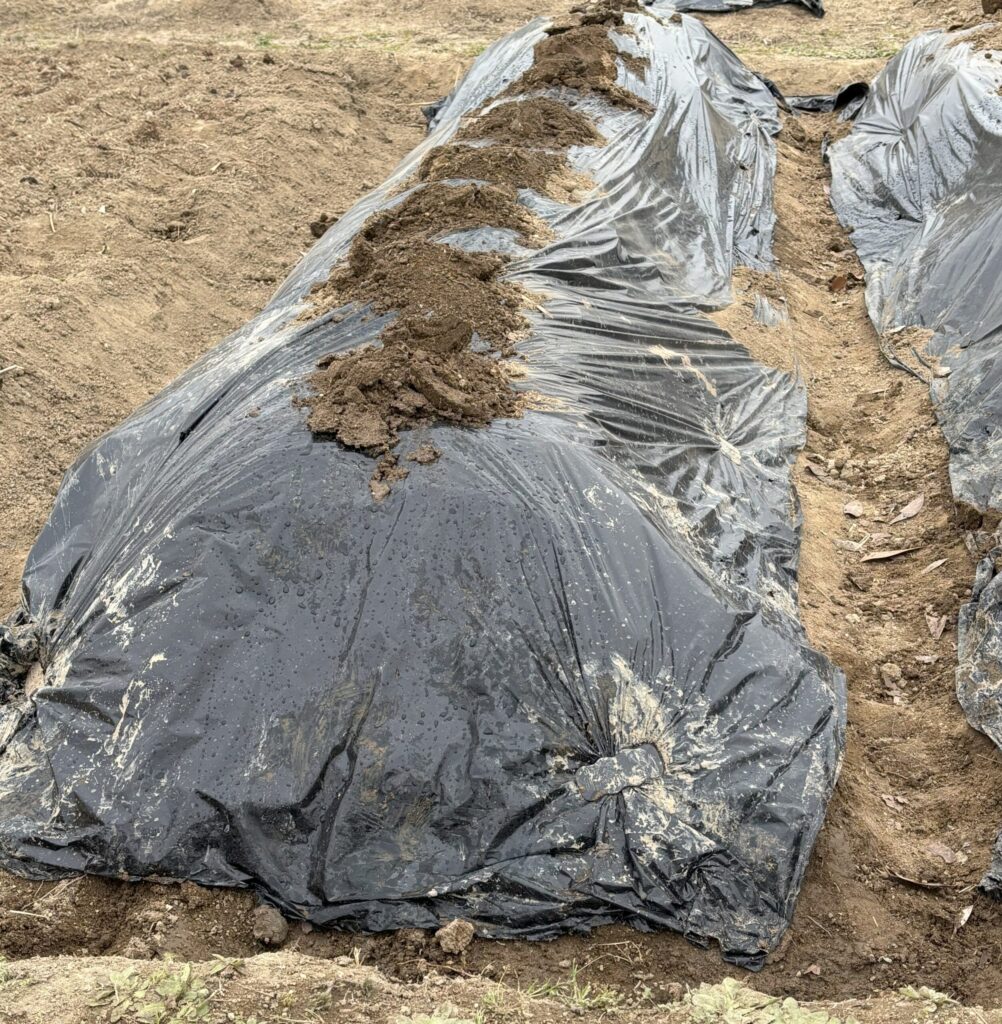
Standard Bed Size (Official Recommendation)
- Top width: 1 meter
- Height: About 45 cm
My Adjusted Bed Size
- Top width: 50 cm
- Height: 45 cm
- Length: About 4 meters
Advantages:
- Lower initial cost
- Easier for women and beginners
- Suitable for small rental gardens
Disadvantages:
- Less space for organic materials
- Limited planting rows
Step-by-Step Instructions
- Till the soil
- Apply organic lime (200–500 g per square meter)
- A hoe works better than a shovel
- Build the bed
- Pile soil up to 45 cm
- Level the surface as much as possible
- Add organic matter (5–10 cm thick)
- Mainly fallen leaves with some branches
⚠️ Avoid windy days — leaves will fly everywhere (learned the hard way!)
- Mainly fallen leaves with some branches
- Cover with soil (about 5 cm)
- Lightly press to help it settle
- Water thoroughly
- Either wait for rain or water with a watering can
- Cover with black mulch
- Secure firmly with mulch pins
- Create small air gaps
- Place soil clumps or weights on top
- Make small holes near the sides
- Let it rest for 2–3 months
- Time depends on the season
Final Thoughts: Was It Hard?
The most challenging parts were:
- The physical effort required to build tall beds
- Collecting enough organic materials
It was a long, physically demanding day — but also exciting and rewarding.
Of course, I was sore the next day, but I’m hopeful that the vegetables grown from this soil will make it all worthwhile.
If you’re interested in organic gardening, sustainable farming, and chemical-free vegetables, the Kin-chan Farming Method is definitely worth trying.
日本語バージョン👇(Japanese version)




コメント